Category: Program Management

  • How portfolio management software can help you improve project success rates

    How portfolio management software can help you improve project success rates

    According to the Project Management Institute, “Project portfolio management is the centralised management of one or more portfolios that enable executive management to meet organisational goals and objectives through efficient decision-making on portfolios, projects, programs, and operations.”

    A successful project portfolio management framework includes:

    • Identifying and evaluating potential projects
    • Approving future projects
    • Assigning project managers to the approved projects
    • Including them in the overall portfolio
    • Sharing assets
    • Optimal resource management

    Project portfolio management (PPM) is used by project managers and PMOs as a method for analysing any prospective initiatives. Data consolidation, pipeline forecasting and real-time information all contribute to PPM’s unified management strategy which focuses on having any projects in an organisation worked on under one governing structure. 

    Reportedly, organisations that choose PPM are more likely to have personnel assigned to the right activities with appropriate resources flowing towards the appropriate projects at the correct moments. Furthermore, this strategy optimises the scheduling of tasks, materials and personnel.

    A PPM tool combines all the methodologies and processes with all required project artefacts in one place distributed among all relevant managers for an optimised decision-making process.

    In this post, let’s look at the advantages of having a PPM tool in an organisation:

    Alignment business strategy & project goals

    The core aim of any business is to fulfil its strategic and short-term goals. Thus, project managers need to guarantee that projects are in line with the firm’s strategy and plans. If this alignment doesn’t occur, it can cause an overload of work, the misuse of resources, and the misuse of employees’ efforts. 

    Without this connection to long-term objectives, the project portfolio would have no awareness of the entity’s needs. A PPM tool gives a firm vision of the business strategy broken down into connected project goals.

    A justified project selection process

    Companies often have an unclear selection criterion when deciding on new projects, making it difficult to assess whether the project would be in line with the company strategy. To help sort through their portfolio of potential projects, organisations apply Project Portfolio Management (PPM). PPM forms a well-defined framework for selection and provides managers with a model to choose the right project. 

    By using ranking methods, scoring models, and other heuristic strategies, PPM tools allow companies to make a go/no-go decision based on well-defined criteria that maximises value for the organisation.

    Better decision-making

    In addition to bringing consistency to how organisations evaluate projects qualitatively and quantitatively, PPM tools assist organisations in being more objective when evaluating and prioritising projects. Portfolio management provides insight into past project metrics such as project costs, profitability, duration, quality, and resource usage, both from a strategic and tactical perspective.

    Continuous improvement

    Through the centralisation of project governance, organisations can see what’s working and what’s not across all projects. That allows PPM officials to identify areas for improvement.

    Enterprise Resource Management

    Project portfolio management (PPM) can help organisations become more efficient in how they deliver projects. This is because repeatable processes are being used, meaning teams no longer spend time judging which approaches are best for each new project, nor do they need to familiarise employees with unfamiliar processes.

    Through regular use of the PPM-endorsed options, the project teams gain greater proficiency in them, bringing further gains to the project delivery function.

    Adherence to project budget and timelines

    The dangers of overspending and delays are real, but advanced PPM tools offer several preventive measures. Intuitive reports proffer an overview of actual or forecasted deviations from the plan.

    Business intelligence provides real-time updates to take corrective action in time. Further, these reports factor in past successes and current scope to mitigate undue expenses on projects. Finally, they can also significantly reduce the project delivery timeline.

    Risk management

    Despite its negative connotations, the risk is often unavoidable. To keep project delivery on track, you need to consider alternatives through an effective risk management plan, according to the likelihood, type, and impact of different risks.

    By minimising risks, you avoid miscalculating gross efforts required for current and upcoming projects. Budgets are stretched and resources are delayed by project revisions. Using PPM, you can detect budget deviations in real-time, reducing financial risks after a project begins.

    It contains standardised project management methods and processes centred around a dependable framework. Using PPM’s estimation tools, your construction program management office can identify wayward projects based on costs versus benefits.

    Increased ROI

    ROI is the revenue/profit generated through project deployment. Companies strive to increase returns, and with portfolio management tools and training, it is possible to bolster project success rates and make cost-saving decisions.

    A PPM enables organisations to identify broader company objectives, optimise resource management, boost productivity levels and increase agility. This means that investing in projects is more likely to result in a positive return on investment, putting businesses in good stead for the future.

    Furthermore, PPM helps to minimise costs associated with resourcing; businesses can predict shortfalls and hire cost-effective global resources ensuring they have the right personnel for upcoming projects.

    Sharing best practices and creating assets

    Effective portfolio management gathers information from past project initiatives that delivered business value and align with the organisation’s long-term goals. By analysing the probability of similar projects flowing in the pipeline, you can prepare your resources for the appropriate training and briefing.

    Leverage PPM tools to streamline your projects and boost success rates

    PPM tools are vital for modern businesses, as they help them achieve their strategic goals. They enable better decision-making, resource allocation, and risk management, and provide a holistic approach to project management.

    By aligning projects with business objectives, selecting the most rational ones, and fostering a culture of shared insights, PPM tools improve efficiency and generate significant returns on investment.

    So, consider implementing a PPM tool implemented in your organisation.

  • The role of emotional intelligence in construction project management

    The role of emotional intelligence in construction project management

    Emotional intelligence, otherwise known as emotional quotient or EQ or EI for short, is the ability to understand, use, and manage your own emotions in positive ways to relieve stress, communicate effectively, empathise with others, overcome challenges and defuse conflict.

    In other words, EI is the ability to understand and manage your own emotions, as well as recognise and influence the emotions of others.

    Success within a project team is rooted in emotional intelligence; it helps nurture relationships, promotes engagement, optimises dynamics, and ultimately leads to exceptional results.

    Emotional intelligence allows us to empathise with one another, communicate effectively, and be socially aware as well as reflect on ourselves. Our behaviour shapes both personal and professional environments.
    As we go through life, we encounter many people in various scenarios that require different approaches from us. Emotional intelligence provides the foundation for understanding others’ motivations and how to respond accordingly. When facing high-pressure situations like conflict, change or challenges – this skill proves invaluable.

    The role of emotional intelligence in the construction industry

    As construction projects are generally people-intensive, conflict and stress can occur. Negative attitudes can be caused by poor intrapersonal skills as well as compromised mental health of role players. 

    Also, construction teams need better knowledge and skills of emotional intelligence (EI) in order to cope with negative emotions and unforeseen problems encountered on the job, which inevitably affect project performance.

    The four core competencies of emotional intelligence

    1. Self-Awareness

    You cannot achieve success without self-awareness. You must recognise your strengths and weaknesses as well as your emotions and their effects on your team. All team leaders, project managers and other members of the management team should be self-aware of their strengths and weaknesses.

    2. Self-management

    Self-management refers to the ability to manage your emotions, particularly in stressful situations, and maintain a positive outlook despite setbacks. Leaders with poor self-management tend to react and have a hard time controlling their impulses, particularly in stressful situations.

    3. Social awareness

    Aside from understanding and managing your own emotions, you should also know how to read the room. Social awareness refers to your ability to recognise others’ emotions and the dynamics within your organisation.

    4. Relationship Management

    Managing relationships involves influencing, coaching, mentoring, and resolving conflict effectively.

    It is the leaders who set the tone of the organisation. If they lack emotional intelligence, it could result in lower employee engagement and a higher turnover rate.

    The four core competencies of emotional intelligence

    That being said, in the construction industry, emotional intelligence plays a crucial role alongside other important skills such as teamwork, communication, and interpersonal skills.

    Considering the construction sector, EI facilitates success. It has a positive impact on construction projects, allowing for successful completion. By fostering strong relationships between team members, a project manager with good EI will be able to complete projects with the full support of their team.

    The creation of strong links amongst team members fosters collaboration, contributing towards successful performance. Apart from devoting time to deepening bonds in the team, construction managers can also benefit from EI by comprehending the personalities and behaviours of other members.

    Human factors are the driving force of any organisation and the successful execution of construction projects is largely dependent on the EI competencies of the project team and subordinates.

    Also, employees tend to seek support and empathy from their managers, so managers have the potential to influence their employees’ emotions and attitudes. Instead of promoting negativity and anxiety, which results in poor performance, they should promote enthusiasm and positivity and enhance performance.

    How emotional intelligence benefits employees in the construction industry

    Emotional intelligence will also allow employees to:

    • Learn more about who they are and what motivates them both on and off the job.
    • learn to channel emotions in a way that is constructive and beneficial to their work, and thus find greater value in what they do.
    •  Acquire a deeper understanding of their emotional capacities.

    Implement programs to improve emotional intelligence and boost project success

    In order for a team to succeed, emotional intelligence must be understood and implemented. Through this, leaders and employees can establish long-term relationships, resulting in greater engagement, effective team dynamics, and, ultimately, exceptional project outcomes.

  • Impact of stakeholder management on the success of a construction project

    Impact of stakeholder management on the success of a construction project

    Most formal sources, such as the Project Management Institute (2001), define stakeholders as: “individuals and organisations that are actively involved in the project or whose interests may be positively or negatively affected by project implementation or successful project completion”

    The success of any project depends on a number of factors:

    • Clear objectives
    • A realistic project schedule
    • Budget
    • Resources
    • Risk and uncertainty management.

    However, the positive outcome of a project depends not only on processes but also on people.

    Stakeholders in a project can be divided into two groups: Internal stakeholders of the organisation, for example, the team members of the project or those who provide funding for the project. External stakeholders are the people who are affected in some way by the project.

    In most projects in the construction sector, there are a variety of stakeholders, and the diversity of their nature and requirements creates a conflict of interest.

    The checklist of stakeholders in a construction project is often extensive and includes facility owners and users, project management, team members, facility managers, designers, shareholders, public administration, employees, subcontractors, service providers, competitors, banks, insurance companies, media, community representatives, neighbours, the public, customers, and regional development agencies.

    Each of them could have an impact on the project’s progress at some point. Although some of them may influence the project more than once, the majority of them will do so at some point in time.

    Stakeholders will determine the success or failure of your project. Here are the main reasons why they are the key players in the project:

    Proper stakeholder management ensures risk-free project delivery

    Risks cannot be completely eliminated, but if you engage stakeholders, you can manage project risks much more successfully. Lack of interaction with stakeholders or their inadequate engagement can confound construction program management.

    Their needs, status, and expectations can change at any point during project execution, which in turn can significantly impact project structure, terms, schedule, and deliverables.

    Stakeholders are a source of project-related knowledge

    In theory, a project manager (PM) should have industry, product, and some technical knowledge, but in reality, they often do not have enough information to compile project requirements and identify constraints. In this case, PMs involve stakeholders and share with them all the important project-related data.

    Stakeholder involvement ensures project execution

    When your project’s stakeholders are aware of every detail, they are more likely to help you complete the project on time and within budget.

    To ensure project success, as a project manager, you need to know who they are and meet them face-to-face to build a working relationship. Those organisations that manage their stakeholders better guarantee big gains in their results over time.

    The key points of stakeholder management in the construction industry along with their impacts are as follows:

    1. Create a detailed stakeholder management plan
      Impact: All stakeholders are properly informed about all relevant stakes
    2. Create a matrix of stakeholders based on Power and Interest
      Impact: PMO would know who the major stakeholders are and who needs to be managed better.
    3. Follow the stakeholder matrix.
      Impact: PMO would know who to inform, consult, collaborate and involve at what phases.
    4. Interview stakeholders during the design phase.
      Impact: Gathering of knowledge, fixing scope.
    5. Ensure transparency.
      Impact: Fewer changes in scope, better acceptability.
    6. Use effective communication methods.
      Impact: All communications are tracked, and no stakeholders are kept in the dark.
    7. Use soft power.
      Impact: Many conflicts which might impact the project can be managed.
    8. Use automated tools and techniques.
      Impact: Ease of communication and less personnel needed for disseminating information.

    Modern construction management studies have seen that there is a better success rate of projects if the above tips are followed.

    Stakeholder management is vital for project success

    project success

    Stakeholder management is a crucial aspect of the success of construction projects. Stakeholders have different interests, expectations, and influences on the project outcomes. Therefore, it is important to identify, analyse, and engage with them effectively throughout the project lifecycle.

    By doing so, PMs can reduce conflicts, enhance collaboration, and increase satisfaction among all parties involved. Stakeholder management can also help achieve project objectives in terms of quality, cost, time, and scope.

  • Effects of Lean Construction Management

    Effects of Lean Construction Management

    Lean Construction is a method for designing production systems in the construction industry with the goal of reducing time, effort, and material waste.

    This type of construction ensures that a project is completed quickly and that fewer costs are incurred during the construction process. Additionally, Lean Construction aims to maximise the value and minimise the costs associated with maintaining, designing, planning and activating construction projects. Globally, the use of Lean Construction increases the productivity of the construction industry.

    Lean Construction has the following key characteristics:

    • Parallel design and construction.
    • Explicitly defined goals for the delivery process.
    • Use of project control consultancy over the entire life cycle of the project from design planning to delivery.

    All people involved in the lean construction project, from the constructors, architects, designers, and owners, to the final construction crew, are considered to ensure that the construction project is of high quality, delivered faster, and costs less.

    Lean thinking principles are applied in the implementation of Lean Construction. The application of lean design principles results in a highly profitable and flexible company.

    These principles include:

    • The customer perspective is considered when defining the design value of the construction process:  Ideas that result in large performance gains are considered to improve the performance of the construction project.
    • Proactive implementation of project cost and control management: Measurement of project planning performance based on results achieved. A metric is used to define planning to be used in lean construction.
    • Expertise takes precedence in solving a problem that can be solved in a day versus the normal process used to solve the same problem in a week.

    Benefits of Lean Construction Management:

    • Generation of quality profit margins
    • Fast realisation of investment
    • Better use of materials and time
    • High Safety methods
    • Fewer scope changes
    • Protecting the environment and respecting workers provides a better social infrastructure

    Lean design and construction are important as capital goods are built in an organised manner. The results achieved impact everyone involved in the construction process. Starting with the savvy owners of the structure to the users of the built facility.

    Tenants living in a building built using the Lean Design approach can realise significant savings in rental costs compared to a traditional approach. This is because the cost and break-even point of implementing the Lean Design approach are conceivably low.

    The lean design approach focuses on sustainable building practices that preserve the environment and ensure green business practices. This method also takes advantage of solar energy, maximising energy use in the design of the building floor plan.

    Additionally, the implementation of Lean Design results in minimal construction waste and byproducts that are not harmful to the environment. The end results are beneficial to both direct and indirect community stakeholders.

    Lean construction designs lead to competition among construction suppliers. Domestic contractors who are in a better competitive position improve the local economy and create new jobs.

    Also, Lean construction has many similarities with BIM, as both aim to optimise construction projects. BIM was introduced as a solution to inefficient construction projects and was gradually adopted by the architecture, engineering, and construction (AEC) industry in the mid-2000s .

    It has been shown for years that the appropriate implementation of BIM can significantly improve the performance and productivity of construction projects. BIM Technologies also helps the design team detect errors using digital models, which helps avoid conflicts and identify overlaps and disruptions during the design and construction phases.

    Lean construction makes projects more efficient

    Lean Construction is a method that strives to eliminate waste and enhance value in the construction industry. It involves the integration of all stakeholders, the clarification of objectives and expectations, and the application of lean thinking principles.

    In the long run, Lean Construction can lead to faster delivery, lower costs, higher quality, and greater customer satisfaction.

  • Advantages of applying agile project management techniques to construction projects

    Advantages of applying agile project management techniques to construction projects

    Agile project management in the construction industry is a process of performing tasks in an orderly and agile manner to ensure proper time management and cost control on ongoing projects.

    It breaks down large projects into smaller tasks and focuses on continuous communication and collaboration between teams such as contractors, stakeholders, workers, suppliers, and consultants.

    This agile methodology helps mitigate risks associated with contract negotiations, schedule delays, changes in project scope, and more through shortened, iterative development cycles while being flexible enough to adapt to changes that occur as the project progresses.

    Agile project management in construction allows you to quickly assess potential issues before they arise and adjust workflows accordingly without sacrificing productivity or quality.

    A construction project is generally managed in a sequential manner. The typical life cycle of a construction project typically goes through the following phases:

    • Design
    • Pre-construction
    • Procurement
    • Development
    • Post-Construction & Operation

    Before the design phase can begin, there is usually a shorter conceptual design phase where the requirements for the project are gathered.

    The entire process is linear, meaning that one phase must be completed before the next begins. In common parlance, these phases in a project plan are called phase gates.

    Agile project management can be applied in the planning phase, which consists of design and pre-construction. Here, the focus of Agile construction teams is to create an iterative work process, often delivering value as they adapt to change. Using sketches, site plans, and so on, they try to gather initial customer feedback as quickly as possible to ensure that requirements have been properly communicated.

    This allows them to adapt to changes early on, which is an industry like construction that is much more cost-effective than reworking later.

    The benefits of agile management in the design phase of a construction project can be summarised in the following points

    Higher product quality:

    Continuous updates to plans and designs result in higher design quality. Through continuous iterations and sprints, a design is conceptualised quickly. This also improves the process and work.

    Eliminating low transparency:

    One challenge that construction companies often face is the inability to properly track their processes from concept to execution, resulting in a chaotic environment. To solve this problem, Agile preaches visualisation at every step of the workflow.

    In practice, this can be achieved by integrating Kanban boards where Agile builds teams can visualise the phases (and subphases) of their work process. Over time, these boards become value stream maps that enable teams to quickly identify constraints, eliminate waste, and respond promptly to issues as they arise.

    Eliminating communication errors:

    Incorporating regular feedback loops to synchronise progress and discuss issues is Agile’s way of addressing this problem. For example, Agile design teams hold daily meetings where they outline what work has been completed, and what they have left to do, and discuss anything that is getting in their way.

    This keeps everyone on the same page and ensures that any obstacles are uncovered as quickly as possible.

    Improving project delays:

    Most construction project delays are due to inaccurate contractor estimates, inadequate risk management, inaccurate designs, and a lack of understanding of needs. With regular meetings and sprints, the team can eliminate these issues as much as possible. It also holds stakeholders accountable for their needs and decisions.

    Higher customer satisfaction:

    Agile incorporates customer feedback and ensures that customers are constantly involved from the beginning of product development and throughout the development process.

    For some medium to small build projects, the build plan can be broken down into smaller sprints so that the customer can see the benefits relatively quickly, rather than waiting for the entire project to end and then evaluating it. This gives the customer the flexibility to make changes to the design in the next sprints and so on.

    Try Agile Project Management today

    Agile project management brings useful tools and techniques, like the Earned Value Management system, that should be used by the construction project management industry. The time is now to embrace agile principles and practices in order to cope with the changing needs and expectations of the market, reduce risks and uncertainties, and increase efficiency and quality.

  • Safety results of PMO practices

    Safety results of PMO practices

    Quality control and safety are increasingly important concerns for project managers. Defects or failures in constructed facilities can result in very high costs. Even minor defects may require reconstruction and affect plant operations. 

    In a worst-case scenario, defects can result in personal injury or death. Accidents during the construction process can also result in personal injury and high costs. Indirect costs for insurance, inspection, and regulation increase rapidly due to these increased direct costs. 

    Good project managers try to ensure that the job is done right the first time and that there are no serious accidents on the project.

    As with cost control, the most important decisions about the quality of a completed facility are made during the design and planning phases, not during construction. During these preliminary phases, component configuration, material specifications, and functional performance are determined. 

    Quality control during the construction phase consists largely of ensuring consistency with these initial design and planning decisions.

    Although conformance to existing design decisions is the primary focus of quality control, there are exceptions to this rule. 

    First, unforeseen circumstances, incorrect design decisions, or owner-requested changes in facility function may require reevaluation of design decisions during construction. While these changes may be motivated by a concern for quality, they represent opportunities for redesign with all the associated goals and constraints. 

    Inspectors and quality assurance personnel are involved in a project and represent a variety of different organisations. Each of the parties directly involved in the project may have their own quality and safety inspectors, including the owner, the engineer or architect, and the various construction contractors. 

    These inspectors may be contractors from specialised quality assurance organisations. In addition to on-site inspections, material samples are typically tested by specialised laboratories to ensure compliance. 

    Inspectors who verify regulatory compliance are also involved. Common examples include inspectors from the local building inspectorate, environmental authorities, and occupational health and safety authorities.

    Construction is a relatively hazardous endeavour. There are substantially more lost work days due to injuries or illnesses in construction than in virtually any other industry. Also, these work-related injuries and illnesses are extremely costly. 

    Unlike most industrial accidents, construction accidents can also injure uninvolved persons. Several crane collapses of high-rise buildings under construction have resulted in the deaths of passersby. Prudent project managers and builders want to reduce accidents, injuries and illnesses as much as possible.

    Safety practices for the Project Management offices should consider insurance premiums costs for individuals. Additionally, they should also have safety and health teams doing audits and inspections at regular intervals during the construction phase.

    Delays caused by injuries and illnesses can be a significant opportunity cost for owners. As we see with modern-day construction planning, inspection activities are included in the schedule. 

    Each of these activities have owners and health and safety report templates are an important part of the documentation. PMO sets baselines and acceptable limits for safety issues. 

    At every phase gate, these parameters are re-checked and discussed with primary stakeholders. It is important that the construction crew knows about these parameters and there is regular safety training conducted to keep them informed. These affect the risk management strategies directly. Most construction companies also publish these reports to the public for awareness and we have seen a significant reduction in accidents and cost overruns in the past decade.

    Never ignore quality control and safety practices

    Quality control and safety are crucial aspects of project management in the construction industry. They affect the costs, performance, and reputation of the constructed facilities. Quality control and safety require careful planning and design, as well as consistent implementation and monitoring during the construction phase.

    These practices are the responsibilities of all project participants and should be prioritised throughout the project lifecycle, and project controls consultancy can help make it happen.

  • Powering Your Projects with Primavera P6 and Power BI

    Powering Your Projects with Primavera P6 and Power BI

    Construction, manufacturing, energy, and IT businesses rely on accurate project planning and execution to be successful. Primavera P6 is a powerful tool for project managers, but it can be difficult to get the most out of its capabilities without help from experts. Fortunately, Power BI can provide the insights you need to make the most of your Primavera data. Let’s take a look at how these two technologies can work together to improve your projects.

    Introducing Primavera P6 and Power BI

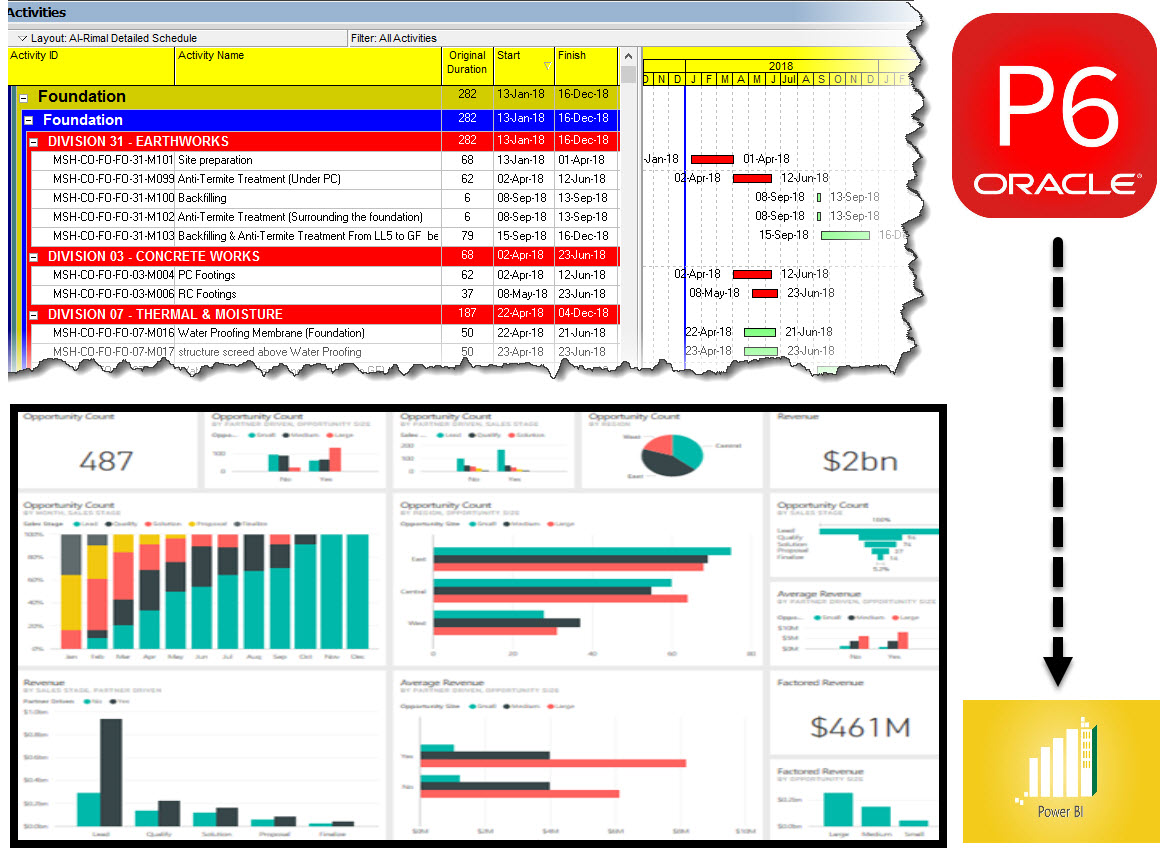
    Primavera P6 is a construction management software application that enables users to schedule and track construction projects. The software is used by project managers and planners to create and monitor project schedules, resources, budgets, and risks. Power BI is a business intelligence tool that helps users to visualize and analyze data. The two tools can be used together to provide insights into construction projects. For example, Power BI can be used to create visualizations of project data that can be used to identify trends and areas for improvement. Primavera P6 can then be used to create detailed schedules and resources plans based on these insights. Together, these tools can help construction professionals to better manage their projects and improve their results.

    What data can be extracted from Primavera P6 and analyzed in Power BI?

    Power BI is a Microsoft business analytics tool that can be used to extract data from various sources in order to create interactive visualizations and reports. One such data source is Primavera P6, a construction project management software. By connecting Power BI to Primavera P6, users can gain insights into their construction projects that would otherwise be unavailable. For example, Power BI can be used to track the progress of individual tasks, identify bottlenecks in the project timeline, and predict when the project will be completed. In addition, Power BI can also be used to monitor resource usage and identify areas where cost savings can be achieved. By harnessing the power of Power BI, construction managers can gain a better understanding of their projects and make more informed decisions.

    How to create reports and dashboards with Primavera P6 data in Power BI

    The first step is to connect to your Primavera P6 database using the Power BI Desktop application. Once you have connected to the database, you will be able to select the data that you want to include in your report or dashboard.

    Once you have selected the data, you can then start to create your visualizations. Power BI provides a wide range of visualization options, so you can tailor your reports and dashboards to meet your specific needs. For example, you could create a bar chart to track project progress, or a pie chart to compare costs across different project phases.

    Once you have created your visualizations, you can then publish your reports and dashboards to the Power BI service, where they can be shared with others in your organization. Publishing to the Power BI service also allows you to take advantage of features such as scheduled refresh, which ensures that your reports and dashboards are always up-to-date with the latest data from Primavera P6.

    Tips and tricks for getting the most out of Primavera P6 and Power BI Integration

    Here are some tips and tricks for getting the most out of Primavera P6 and Power BI:

      • Use Power BI to create custom reports for your Primavera P6 data. This way, you can easily visualize important information and identify trends.

      • Take advantage of the Data Model Explorer in Power BI to better understand the relationships between different data sets.

      • Use the Query Editor in Power BI to transform and cleanse your data before creating reports or dashboards.

      • Use conditional formatting in Power BI to highlight key data points or visually flag issues.

    By following these tips, you can get the most out of Primavera P6 and Power BI. With these tools at your disposal, you’ll be able to manage your projects more effectively and make better decisions for your business.

    So, there you have it- a quick introduction to Primavera P6 and Power BI. I hope this has given you some ideas about the kinds of reports and dashboards you can create with data from your projects in Primavera P6. In future posts, we’ll explore more specific topics related to working with Primavera data in Power BI, so stay tuned! If you have any questions or comments on this topic, please let me know in the comments below.

  • Fundamental differences between Microsoft Project and Oracle Primavera

    Fundamental differences between Microsoft Project and Oracle Primavera

    This question asked quite often from many customers whether we should use MS Projects or Primavera? Which one is good for my project management needs? So let’s address this thoroughly today.

    Though both MS Projects and Primavera P6 are the two most popular choices in the market for construction projects, most contractors are not sure which one would suit them better. Project Management Information Systems are not only costly but also require too much data feeding to actually start producing some real results from them, so rather than wasting precious time and money, take out some time and watch this video till the end.

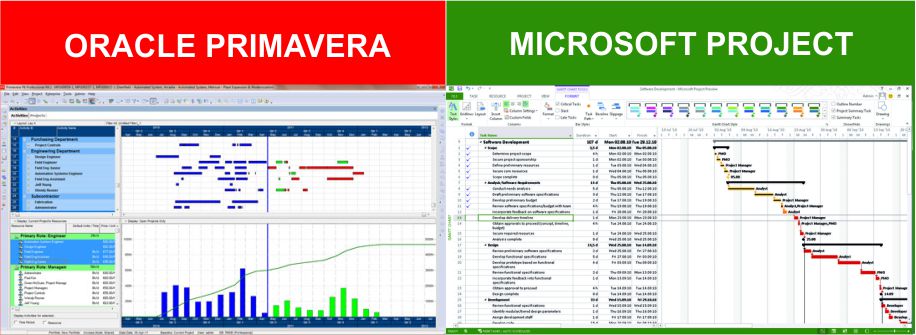
    The key difference between both Primavera and MS projects is that Primavera is a database-based software and MSP is a file-based software. So, how does this difference actually affect you and your organization? There is no one version of the truth when it comes to file-based software and it becomes very difficult to manage the transfer of information due to reliability concerns. Simply stated, you don’t know whether your planner has made some changes to the file after the file comes to you.

    With database software, all the data is stored on a single platform where all the updates are synchronized centrally and multiple users can access the platform at the same time. So Primavera comes with this exceptional ability to give you one version of the truth for the whole project team.

    The second most important difference is the User Interface. The user interface of Microsoft project is very similar to that of excel with some additional project management features like scheduling, baselines, and resource allocations, but because these are just features that were added as the product advanced you sometimes struggle to find all the things in one place. Also, there are no functions to sort and filter the data as per activity coding or work breakdown structures. While on the other hand Primavera was meant to be an enterprise-grade software on the Oracle SQL database since its inception so it has all the database management features required in a lengthy schedule and is able to manage the information very well due to its coding and WBS functions.

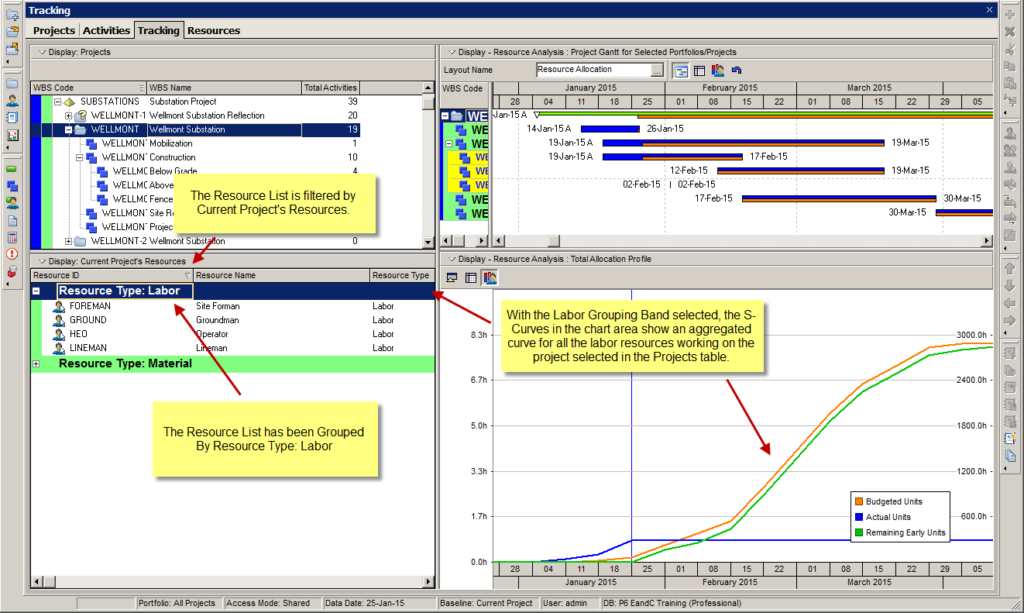
    S-Curves

    The third very important difference between both is the integration of Risk Management in a Schedule. As we all know: Man Plans and God Laughs, so it is very important to take into consideration the risks that are an inherent part of the Project Management business. MS Projects doesn’t take into account the risks associated with the activities while Primavera takes both qualitative and quantitative risks into consideration at the activity level. There are more than 15 other differences that make Primavera more reliable. So, what’s the verdict? See Primavera is costlier compared to MS Projects and is definitely suitable for large projects above 5 million involving multiple users and a large number of activities. Here most projects are part of a bigger project, and a lot of integrations and APIs are required.

    Conclusion :

    If this sounds like you then Primavera is the right choice for you but if you have smaller projects with fewer complexities, go with MSP. If you are stuck somewhere and need more information on any of the PMIS software, Click Here & we will help you in the best way we possibly can!

  • How to prepare a construction programme that works

    How to prepare a construction programme that works

    A good construction programme is essential for the control mechanism of any construction project. Here we highlight the important tips in the form of a checklist that covers all the important elements to consider while preparing a construction programme that will yield positive outcomes.

    In order for the construction owners to appropriately monitor progress, the contractor should submit programmes showing the sequence, method, and timing proposed for the execution of works and against which actual and forecast progress of the works can be monitored and assessed. 

    Such programmes shall include the Works Programme (and the more detailed programmes to be extracted therefrom), Price Time Curves, and all other programmes that are identified in the particular specification or as instructed by the project manager of the employer.

    12 critical elements of the work programme which you should never miss

      • Starting date, access dates, key dates and completion dates are the most important elements of the construction works programme to verify it with the contract documents to get it right.

      • Time schedule available in a format that can be interrogated (Primavera P6 format provided, or other agreed software)

      • The order and timing of the operations that the Contractor plans to provide the works.

      • The order and timing of the work of the employer and other contractors as last agreed with them by the contractor as stated in the works information.

      • The dates when the contractor plans to meet each condition stated for the key dates and to complete other work needed to allow the employer and other contractors to do their work.

      • Access and availability dates along with the dates of employers’ acceptances.

      • programme divided into sufficient activities to cover the scope of works defined in the particular specification where each activity should be less than either 28 days or the frequency of the reporting whichever is lesser (except manufacturing activities).

      • Key dates and milestone dates should be clearly indicated.

      • Level of resource in tabular and/or histogram format provided with the submitted programme.

      • Other critical dates indicated (such as power-on dates, expected statutory submissions, inspection/approval dates, etc.)

      • All principal submissions required under the contract identified (such as quality plans, safety plans, programmes, method statements, design documents and other deliverables)

      • Interface dates as per interfacing schedule indicated.

    “Keep your schedule as simple as possible; thus enter the minimum amount of information into your schedule that is required to meet management and reporting needs, which in turn will make the schedule simpler to create, change and update.”

    Paul Harris, Director, Eastwood Harris Pty Ltd

    What to include with your works programme submission?

    Your Works Programme should be accompanied with the following information:

      • Cross-referenced to accompanying method statements (or previously submitted method statement)

      • Programme narrative provided as per expectations laid out in the contract specification. Usually, this includes an explanation of cycle times and work sequences, deployment of labour and contractor’s equipment, production rates in identifying durations, breakdown of labour requirements by trade, leads and lags in logic, schedules of quantities used in developing the programme and shifts assumed etc.

      • Analysis report identifies all activities and events that are critical or have negative float (or have very nominal positive float), and shall assess the risk of any impact on the programme and on the achievement of key dates. The contractor shall identify all the steps being taken to minimise such risks.

      • Programme narrative cross-referenced to mobilisation and logistics plan.

      • Price Line Curve: It shall be derived from the pricing document and the works programme should show in graphical and tabular form the anticipated cumulative price of work done over time as a percentage of each cost centre value.

    How to organise your works rogramme?

    When organising your works programme for systematic work assessment and progress reporting, consider following steps below. 

    First, you should indicate the activity duration, early and late dates schedules, and total float in the programme bar chart. This will help you to see the critical path and the slack time of each activity. 

    Use discrete and understandable activity descriptions that clearly define the scope and deliverables of each activity. Then, you should organise the activity in a logical work breakdown structure that includes work phases, and code each activity to indicate the relevant cost centre, phase of the work, area, facility, or location, and workgroup responsible for the activity. This will help you to group and filter the activities according to different criteria. 

    Finally, you should complete the programme setup with appropriate layouts, filters, etc. (such as resource histograms) that will help you to display and analyse the programme in different ways.

    Planning Best Practices while making a complex construction Programme – Do’s and Don’ts

    “First and foremost, a programme is a way of communicating the project plan. The programme is, therefore, a dynamic management tool that should be updated as the project plan changes over the life of the project and re-communicated to the project stakeholders to facilitate effective decision making.”

    Adam Zantis (BBCM, JD) Director, Zancon

    From our experience we consider below points as the planning best practices for construction works programme,

      • A reasonable number of activities provided and without confusing programme logics.

      • Each activity with a unique description without confusion to others.

      • Constraints – the programme should have no mandatory constraints and minimum use of other constraints.

      • No out of sequence activities or broken logic is a big no-no.

      • Use of excessive long leads/lags is not recommended.

      • Use of negative lags is not recommended.

      • Use of start to finish links is not recommended.

      • Links to/from summary taskbars (or level of effort activity) is not recommended.

      • Full end to end logics (no un-linked activities except start and finish activity).

      • Programme should be compliant with relevant activity calendar and week numbering conventions.

      • Programme should be loaded with key resource items and monetary values as per the tendering line items to match the cost code values in the tender.

      • Except for manufacturing works, an activity that exceeds 4 weeks in duration has to be divided into further sub-activities.

      • Always identify time constraints, resource constraints and time risk allowance, if any.

    It is guaranteed that if you follow even 90% of the above mentioned items as a thorough checklist you will definitely get your programme approved from the employer with some minor comments if any. If you want to improve programme management even more, get in touch with us for project controls consultancy